
Arrested for Domestic Assault in Calgary: What Happens in the First 48 Hours
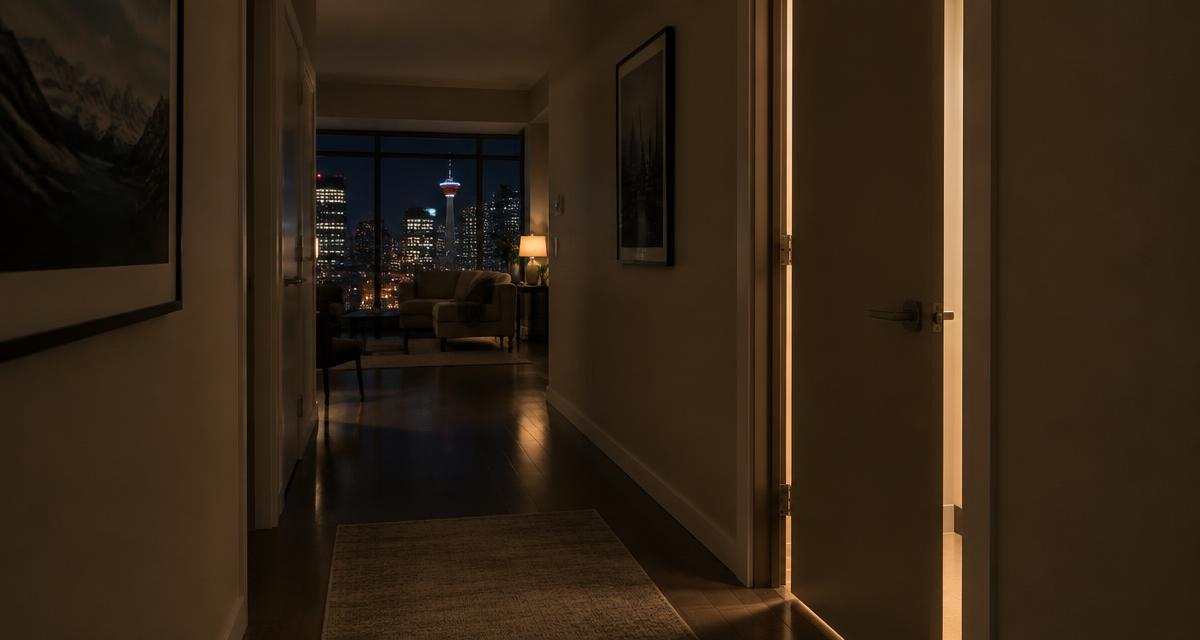
An argument in a Beltline condo gets loud. A neighbour calls 911. Within twenty minutes there are two Calgary Police Service officers in the hallway, and one of them is asking you to step outside. Nobody in the unit wants anyone charged. By midnight you are in a cell, and by the following afternoon a court order says you cannot go home or speak to the person you live with.
Almost every client we meet on a domestic file describes some version of that night. What follows is what actually happens in the first forty-eight hours, and where the decisions that shape the rest of your case get made.
Why you were charged even though nobody wanted you to be
Alberta police and Crown prosecutors operate under a pro-charge, pro-prosecution policy in domestic matters. Once officers have reasonable grounds to believe an assault occurred, they lay the charge. The complainant is a witness, not the prosecutor, and has no power to withdraw the file, a point we cover in detail in Can a Victim Drop Criminal Charges in Alberta?
It also matters that "domestic violence" is not itself an offence in the Criminal Code. You will be charged with assault, assault with a weapon, uttering threats, criminal harassment, or mischief. The domestic relationship is what drives how the file is prosecuted and, on conviction, is an aggravating factor at sentencing under s. 718.2(a)(ii).
Hours 0 to 3: the station, and the only call that matters
You will be searched, processed, and placed in cells. Police must advise you of your right to counsel under s. 10(b) of the Charter and give you a real opportunity to use it; free duty counsel is available around the clock, and you are entitled to speak privately.
Take the call. Then say nothing else about the incident.
Officers will often invite you to "give your side," particularly where the allegation is one-on-one with no independent witnesses. That interview is recorded, and everything in it is admissible against you. Explanations that feel exculpatory in a cell at 2 a.m. (that you were only holding her back, that you grabbed the phone first) routinely become the Crown's proof of the physical act. Our guide to being arrested or detained in Alberta sets out the scope of that right in more detail.
Hours 3 to 24: will the police release you?
On many charges, the officer in charge can release you from the station on an undertaking. On domestic files in the Calgary region, that is less common. Police frequently hold the accused for a hearing before a Justice of the Peace, particularly where there is alleged injury, alcohol, a prior record, or a shared residence.
If you are held, s. 503 of the Criminal Code requires that you be taken before a justice within twenty-four hours where one is available. In Calgary, that hearing is conducted by a Justice of the Peace, usually by video, with the accused appearing from the Arrest Processing Services facility and the Justice of the Peace appearing from the Calgary Courts Centre. We explain the mechanics in What If the Police Do Not Release Me After Arrest in Calgary?
The bail hearing, and why the plan matters more than the facts
At the bail stage the court is not deciding guilt. It is deciding whether you can be released and on what terms. What moves that decision is a concrete plan: a confirmed address away from the complainant, employment to preserve, a family member willing to act as surety, and a proposal that addresses whatever the Crown says is the risk.
One provision catches people off guard. Under s. 515(6)(b.1), if you are charged with an offence involving violence against an intimate partner and you have a prior conviction for violence against an intimate partner, the onus reverses: you must show why you should be released, rather than the Crown showing why you should be held. These reverse onus provisions came into effect in Summer 2026. Our Calgary bail hearing lawyers take these calls at any hour, because a plan assembled before the hearing is worth far more than one assembled after.
The conditions you will almost certainly be released on
Expect some combination of: no contact directly or indirectly with the complainant, no attendance at the residence or their workplace, surrender of firearms, abstention from alcohol, a fixed address, and reporting to probation.
Two features of these conditions cause more breach charges than anything else. First, "indirectly" includes messages passed through a friend, a parent, or a sibling. Second, the order binds you and only you. If the complainant calls you, invites you home, or shows up at your door, answering is still a breach, as we set out in What Happens If I Breach My Bail Conditions in Calgary? A breach is a fresh charge, and it does more damage to your position on bail, during resolution discussions, and at sentencing than the original allegation often does.
If the conditions are unworkable, they can be varied, by consent with the Crown, or on application. That is a task for counsel, not a favour to ask of the complainant.
Hours 24 to 48: where do you sleep, and how do you get your things?
You may be released with nothing but the clothes you were arrested in, barred from an address where your work equipment, medication, and passport are sitting.
The answer is a term permitting a single supervised attendance at the residence with a police escort to retrieve personal property. It is best built into the release order at the outset, which is one more reason to have counsel on the file before the hearing rather than after. Do not attend on your own, and do not send someone to collect items for you without checking whether that contravenes your conditions.
The second order you may not know about
Separately from the criminal charge, the complainant, police or a caseworker can obtain an Emergency Protection Order under Alberta's Protection Against Family Violence Act. An EPO can be granted by a Justice of the Peace without notice to you, at any hour, and can grant exclusive possession of the home.
An EPO must be reviewed by the Court of King's Bench within nine working days of being granted, per section 2(6) of the Protection Against Family Violence Act. That review is your opportunity to respond to the allegations on the record, and what is said there can affect the criminal file. Breaching an EPO is itself an offence. Complying with your bail conditions does not mean you are complying with an EPO; they are two orders, from two courts, and you are bound by both.
Five things not to do before you speak to a lawyer
- Do not contact the complainant. Not to apologize, not to arrange childcare, not to say you love them. Apologies are read in court as admissions, and the contact itself is a breach.
- Do not delete messages or photos. Communications around the incident are frequently the strongest material the defence has.
- Do not post about it. Social media and dating-app activity gets pulled into these files regularly.
- Do not discuss the facts with family members. They may be Crown witnesses, and their statements will be taken.
- Do not miss your first appearance. A failure to appear in court adds a charge and undermines any release position you have. Attend any date given for fingerprinting.
What happens after the first 48 hours
Calgary has operated a specialized domestic violence court since 2001, a dedicated docket courtroom where these files are triaged, with HomeFront caseworkers supporting complainants alongside the Crown's domestic prosecutions team. These caseworkers stay in touch with the complainant and allow the complainant to tell the Court if they want you to return home. For this reason, if you are released by a Justice of the Peace on conditions to not go home or to have no contact with the complainant, we like to set a quick court date for your first appearance before a Justice within a few days. This allows us to start the process of amending conditions to get you back home. It moves quickly, which cuts both ways: the pressure to resolve arrives early, sometimes before disclosure has been reviewed. Part of our job, especially when emotions are high, is to help you understand the long-term effects of the possible resolutions.
Not every domestic file ends in a trial or a criminal record. Depending on the allegation, the record and the evidence, the realistic paths include the charges being "dropped" or withdrawn, a peace bond under s. 810, a resolution involving counselling, a plea to a lesser charge, or a trial where the Crown's case does not hold. What determines which of those is available is usually decided in the first week, by how the release order was structured, whether a statement was given, and whether the file was reviewed by counsel before anyone agreed to anything.
Talk to a Calgary domestic assault lawyer tonight
Our lawyers answer the phone 24 hours a day, including from the cells. If you or a family member has been arrested, call (587) 355-8889 for a free, confidential consultation, or send us your case details. Learn more about how we defend domestic violence and assault charges in Calgary.